Pontoon boats have become one of the most popular ways to enjoy Lake Wisconsin and Southern Wisconsin waterways. Whether you’re entertaining family and friends, spending weekends fishing, or simply cruising the lake, protecting your investment starts with choosing the right boat lift.
Pontoon boat lift installation on Lake Wisconsin is different from installing a lift for a fishing boat, ski boat, or runabout. Pontoon boats have unique weight distribution, dimensions, and support requirements that require specialized lift configurations and careful planning.
The wrong lift can create loading problems, unnecessary wear on your boat, and expensive repairs down the road. The right lift makes launching, loading, and protecting your pontoon simple and reliable for years to come.
This guide covers everything waterfront property owners should know before investing in a pontoon boat lift on Lake Wisconsin.
Key Takeaways
- Pontoon boats require lift systems designed specifically for pontoon geometry.
- Water depth, bottom conditions, and wave exposure significantly affect lift selection.
- Lift capacity should be based on actual operating weight, not just manufacturer dry weight.
- Vertical and hydraulic lifts both work well for pontoons, but each has advantages.
- Professional installation helps ensure proper alignment, safety, and long-term performance.
- Scheduling installation before spring demand increases can improve availability and pricing.
Why Pontoon Boats Require A Different Lift Setup
Unlike traditional boats that ride on a V-shaped or flat-bottom hull, pontoons are supported by two aluminum tubes, often referred to as logs.
Because the weight is distributed differently, pontoons require specialized support systems designed to cradle the tubes correctly.
A traditional bunk arrangement designed for a runabout may not provide proper support for a pontoon. When a boat is not supported correctly, it can create:
- Uneven weight distribution
- Loading difficulties
- Additional stress on the pontoon logs
- Increased lift wear
- Stability concerns while stored
Pontoon-specific lifts use bunk systems and support structures designed around the boat’s geometry. This allows the boat to sit evenly, load more easily, and remain stable throughout the boating season.
Understanding Lake Wisconsin Conditions Before Installation
No two waterfront properties are exactly alike.
The conditions at your shoreline play a major role in determining what type of lift will perform best.
Water Depth
Water depth is one of the first factors evaluated during a site assessment.
A lift must provide enough clearance for:
- Safe loading and unloading
- Seasonal water level changes
- Full lift operation
- Proper storage above the waterline
Shallow water can limit lift options, while deeper water may require different configurations and installation techniques.
Bottom Conditions
The lake bottom directly affects lift stability.
Common bottom types include:
- Sand
- Gravel
- Rock
- Muck
- Mixed sediment
Soft muck bottoms often require larger footpads or additional stabilization to prevent settling.
A lift that performs well on a sandy shoreline may require modifications on a softer bottom.
Wind And Wave Exposure
Properties exposed to prevailing winds and boat traffic typically experience greater wave action.
Wave exposure affects:
- Lift positioning
- Anchoring requirements
- Boat stability
- Long-term equipment wear
A protected cove and an exposed shoreline often require very different lift solutions, even for the same boat.
How To Choose The Right Lift Capacity
One of the most common mistakes pontoon owners make is selecting a lift based solely on the manufacturer’s published dry weight.
Dry weight does not account for:
- Fuel
- Batteries
- Gear
- Coolers
- Anchors
- Electronics
- Passengers
The actual operating weight of a pontoon is often significantly higher than the number listed on the specification sheet.
Calculating Pontoon Weight
Start with the manufacturer’s dry weight.
Then add:
- Fuel weight (approximately 6 pounds per gallon)
- Motor weight if not included
- Typical gear load
- Accessories and upgrades
Once you determine a realistic operating weight, choose a lift with additional capacity beyond that number.
Operating near a lift’s maximum rating can increase wear and shorten equipment life.
Most professionals recommend selecting the next capacity level when your boat falls near the upper limit of a lift’s rating.
Vertical Boat Lifts Vs. Hydraulic Boat Lifts
The two most common lift styles for pontoons on Lake Wisconsin are vertical lifts and hydraulic lifts.
Both provide excellent protection but offer different ownership experiences.
Vertical Four-Post Lifts
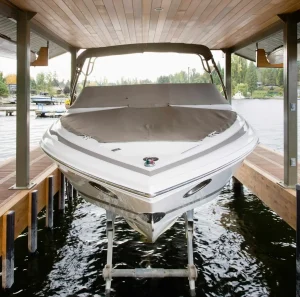
Vertical lifts use cables and a motor to raise the boat straight out of the water.
Benefits include:
- Proven reliability
- Lower upfront cost
- Wide parts availability
- Easier long-term service
- Strong performance across varying water levels
Vertical lifts remain the most common pontoon lift style on Wisconsin lakes.
Hydraulic Boat Lifts
Hydraulic systems typically allow the boat to drive onto a submerged platform before being raised.
Benefits include:
- Easier loading
- Less need for alignment
- Simplified docking during windy conditions
- Smooth operation
Hydraulic lifts often appeal to owners who use their pontoon frequently or regularly boat alone.
The primary tradeoff is a higher purchase price and more complex mechanical systems.
Common Mistakes Pontoon Owners Make
Buying a lift is a long-term investment. Avoiding a few common mistakes can save significant money and frustration.
Choosing A Lift Based Only On Price
The least expensive option is not always the most economical over time.
An undersized or poorly matched lift can create repair costs that exceed any initial savings.
Ignoring Shoreline Conditions
Water depth, bottom composition, and wave exposure all influence lift performance.
Choosing a lift without evaluating site conditions can lead to installation challenges and operational issues.
Underestimating Boat Weight
Many pontoons gain significant weight from accessories, larger engines, and equipment.
Lift capacity should always account for actual operating weight.
Waiting Too Long To Schedule Installation
Spring is the busiest time of year for boat lift installations.
Waiting until April or May often means longer lead times and fewer scheduling options.
Pontoon Lift Accessories Worth Considering
Several accessories can improve convenience and help protect your investment.
Canopies
Canopies help shield your pontoon from:
- UV damage
- Bird droppings
- Leaves and debris
- Weather exposure
For many owners, a canopy becomes one of the most valuable lift upgrades.
Guide Rails
Guide rails help center the boat while loading.
They are especially useful for:
- Windy conditions
- New boat owners
- Solo docking situations
Remote Controls
Wireless controls make launching and storing your boat faster and more convenient.
Solar Charging Systems
Solar charging options can help maintain battery power for electric lift motors without requiring major electrical upgrades.
New Vs. Used Pontoon Boat Lifts
Both new and used lifts can be good investments when selected carefully.
Benefits Of Buying New
New lifts offer:
- Manufacturer warranties
- Current technology
- Full parts support
- Predictable maintenance requirements
Benefits Of Buying Used
Used lifts may provide:
- Lower upfront cost
- Faster availability
- Access to premium models at reduced prices
What To Inspect On A Used Lift
Before purchasing used equipment, inspect:
- Cables
- Pulleys
- Welds
- Frame condition
- Bunks
- Hardware
- Motor operation
A professional inspection can help identify hidden issues before purchase.
Pontoon Boat Lift Maintenance Tips
Routine maintenance helps maximize lift lifespan and reliability.
Monthly Inspections
During boating season, check:
- Cable condition
- Fasteners
- Electrical connections
- Motor performance
- Bunk alignment
End-Of-Season Service
Before winter storage, inspect:
- Structural components
- Corrosion
- Hardware wear
- Cable tension
Addressing small issues before winter often prevents larger repairs in spring.
Why Professional Installation Matters
A lift can only perform as well as it is installed.
Professional installation helps ensure:
- Proper leveling
- Correct bunk placement
- Safe electrical setup
- Secure anchoring
- Efficient boat loading
- Long-term reliability
Even the highest-quality lift can create problems if installed improperly.
A site assessment before installation allows waterfront professionals to recommend the most appropriate solution based on your boat, shoreline, and usage patterns.
When To Schedule Pontoon Boat Lift Installation
For most Wisconsin boat owners, earlier is better.
Winter Planning
January and February are ideal months to:
- Evaluate lift options
- Schedule site visits
- Order equipment
- Reserve installation dates
Spring Installation Season
Demand increases rapidly as boating season approaches.
Property owners who wait until late spring often face longer scheduling delays and reduced equipment availability.
Planning ahead helps ensure your lift is installed and ready when boating season begins.
Service Areas Throughout Southern Wisconsin
Pontoon boat lift installation services are commonly available throughout Southern Wisconsin, including:
- Lake Wisconsin
- Lake Monona
- Lake Waubesa
- Lake Kegonsa
- Wisconsin River waterfront properties
- Dane County lakes
- Columbia County waterfront communities
Because every shoreline is unique, lift recommendations should always be based on a site-specific evaluation rather than a one-size-fits-all approach.
Frequently Asked Questions
Do pontoon boats need a special lift?
Yes. Pontoon boats require support systems designed specifically for their tube-style construction. Proper bunk placement and weight distribution are critical for safe storage.
What is the best boat lift for a pontoon?
The best lift depends on water depth, shoreline conditions, boat size, and owner preferences. Vertical and hydraulic lifts are both popular options for Wisconsin pontoon owners.
How much lift capacity do I need?
Lift capacity should exceed the boat’s actual operating weight, including fuel, gear, accessories, and motor weight.
How long does pontoon boat lift installation take?
Most installations can be completed within a day, although site conditions and equipment configuration can affect timing.
Should boat lifts stay in the water during winter?
No. Wisconsin winters can create significant ice pressure that may damage lift components. Seasonal removal is strongly recommended.
When should I schedule installation?
Winter planning and early spring scheduling typically provide the best availability and help avoid peak-season delays.
Final Thoughts
Choosing the right pontoon boat lift on Lake Wisconsin involves more than selecting a weight rating and placing an order. Water depth, shoreline conditions, lift design, capacity, and professional installation all play important roles in protecting your boat and maximizing your investment.
Whether you are installing your first lift, replacing an aging system, or upgrading for a larger pontoon, taking the time to evaluate your property and choose the right equipment will provide years of reliable performance on the water.
A professional site assessment remains the best first step toward finding the ideal lift solution for your boat, your shoreline, and your boating lifestyle.