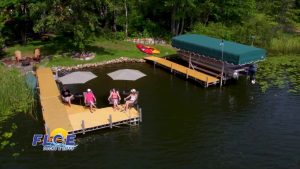
The aluminum dock vs wood dock wisconsin debate comes up every spring without fail.
Your neighbor just put in aluminum. Your brother-in-law swears by cedar. The guy at the marina said pressure-treated is fine if you seal it. And now you’re standing at the shoreline trying to figure out what actually makes sense for your property.
There’s no single right answer — but there is a right answer for your specific situation. This breaks it down without the sales pitch.
What Wisconsin Does to Docks That Other States Don’t
Most dock comparison guides are written for places where the water doesn’t freeze. They’re not wrong exactly, but they’re missing the most important variable for anyone on Lake Wisconsin, Monona, Waubesa, or Kegonsa.
Ice moves. It pushes. It exerts lateral pressure on anything anchored to a lake bottom — bends steel, cracks concrete, destroys dock sections that weren’t pulled before freeze-up.
Which means most Wisconsin lake owners are doing seasonal removal. That single fact changes the entire comparison.
A wood dock section — standard frame, wood decking — is heavy. Two to three times what a comparable aluminum section weighs. If you’re hiring our dock removal and installation team every fall and spring, that weight adds time and cost every single year. If you’re doing it yourself, you feel it in your back for as long as you own the place.
Aluminum sections are light enough that plenty of homeowners handle installation with one other person. No equipment needed on most setups. That’s not a minor convenience — over ten years of seasonal removal, it adds up to something real.
Aluminum Dock vs Wood Dock Wisconsin: What Maintenance Actually Looks Like
Be honest with yourself here.
Wood needs work. Not a little work — real, recurring, every-few-years work. Pressure-treated lumber holds up better than untreated, and cedar is naturally rot-resistant, but both need staining or sealing on a regular cycle. Fasteners back out and corrode and need checking every season. Boards crack, go soft, or start feeling sketchy underfoot and need replacing. Frame connections collect water and that’s where rot starts quietly before you notice it.
Some people genuinely enjoy that kind of maintenance. They like being out on the dock with a brush on a cool September morning. If that’s you, wood makes sense.
If it’s not you — if maintenance is the thing that was supposed to happen last fall and then didn’t — wood is going to cost you more in the long run than you’re budgeting for.
Aluminum is different. No staining cycle, no board replacement, no sealing. Fasteners loosen over time and should get checked. The surface can get slippery when wet, which grip tape solves in about twenty minutes. That’s mostly the maintenance list.
The U.S. Army Corps of Engineers specifically flags maintenance burden and seasonal removal requirements as key factors for dock material selection in northern climates. Wisconsin is exactly what they’re describing.
How Long Each One Actually Lasts
Wood dock frame, well-maintained, pulled every fall — fifteen to twenty-five years before the structure needs serious attention. The decking boards often need replacing before that. If maintenance slips, that range shrinks fast.
Aluminum frames on the same lakes routinely go thirty to forty years. You’re not replacing boards. The main failure modes are physical damage from impact or hardware that gets ignored too long — not the gradual degradation wood does naturally over time.
Pure lifespan, aluminum wins clearly. Whether that justifies the price difference is a separate question and depends on your timeline.
The Cost Conversation Nobody Enjoys
Wood costs less to buy. Sometimes significantly less, depending on lumber prices and configuration — and lumber prices have swung considerably in recent years.
Aluminum costs more upfront. The gap varies but it’s real.
Here’s where it gets complicated. Add up ten years of sealant, board replacement, and more labor-intensive seasonal removal — and the total cost of owning a wood dock often lands closer to aluminum than the initial price suggests. Sometimes it crosses over entirely. That math depends on how much maintenance actually gets done, what you pay for labor, and how long you plan to own the property.
If budget is a real constraint right now, our used docks and lifts inventory is worth a look. Quality used aluminum sections hold up well and represent real savings over new without giving up the long-term benefits of the material.
What It Looks Like From the Shore
This part is subjective and that’s fine.
Wood looks like what most people picture when they think of a lake dock. It blends into the shoreline. Warm underfoot in August. For a lot of families there’s something specifically tied to lake life about a wood dock — the sound it makes, the way it feels under bare feet.
Aluminum looks clean and modern. It doesn’t have that warmth and doesn’t pretend to. But it also doesn’t develop the weathered gray that wood gets when the sealant has worn off and nobody’s gotten to it yet. Year fifteen looks about the same as year one.
Some people love weathered wood. Looks lived-in to them. Others look at the same dock and think it looks neglected. Neither reaction is wrong.
Know which one you actually want to look at from your kitchen window for the next twenty years. That’s a legitimate input to this decision.
Aluminum Dock vs Wood Dock Wisconsin: Where One Wins Clearly
Doing your own seasonal removal every year? Aluminum, without question. Lighter, fewer people needed, easier every single fall and spring.
Want to buy something and mostly not think about it? Aluminum.
Tight on budget right now and comfortable doing real maintenance? Wood can be a reasonable starting point — especially used sections in solid condition. Just go in clear-eyed about what you’re committing to over time.
Heavy wave action on your frontage, or significant ice movement history on your stretch of lake? Aluminum’s lighter weight and modular design handles the seasonal removal cycle more cleanly.
Our docks and piers page covers what we carry and install. If you’re trying to figure out what makes sense for your specific shoreline — bottom type, water depth, wind and wake exposure — a site visit tells you more than any comparison article. Our boat lift and dock repair team has worked on enough different properties across these four lakes that we can give you a straight read on what we’d actually put in if it were our property.
What’s Actually Happening Out There Right Now
Honest observation from years of working on Lake Wisconsin, Monona, Waubesa, and Kegonsa: the trend has moved clearly toward aluminum. Not because wood stopped working — it didn’t. But because lighter weight plus lower maintenance plus longer lifespan has won out for most owners once they run the numbers over a full decade.
We still install and service wood docks. If your frame is solid and you like what you have, maintaining it and replacing boards as needed is often the right call. Tearing out a functional dock just to switch materials is rarely smart.
Starting from scratch, or replacing something that’s finally reached end of life? Aluminum is worth a serious look even if the initial price feels higher than expected.
Either way — come talk to us before you commit. A site visit costs nothing and we’re not going to push you toward something that doesn’t fit your situation. Contact JD Hellenbrand and we’ll look at your shoreline, your dock situation, and tell you honestly what we’d recommend. If you’re also thinking about lift equipment at the same time, our boat lift installation page is a useful starting point for that side of the conversation.
Frequently Asked Questions
Is aluminum or wood better for a Wisconsin lake dock? For most Wisconsin lakefront owners, aluminum holds up better long-term — lighter for seasonal removal, no rot, minimal maintenance. Wood costs less upfront but requires consistent attention every few years. The right answer depends on your budget, how you use the dock, and whether you’re handling seasonal installation yourself.
How long does a wood dock last in Wisconsin? A well-maintained wood dock lasts fifteen to twenty-five years on the frame, with boards often needing replacement before that. Maintenance consistency is the single biggest factor in where you land on that range.
Does aluminum get slippery when wet? It can. Most systems have textured surfaces and grip tape handles the rest quickly and cheaply. Worth asking about surface finish when comparing specific systems.
What’s actually cheaper — aluminum or wood dock? Wood costs less upfront. Over ten to fifteen years, total ownership cost often lands surprisingly close to aluminum once you factor in maintenance, board replacement, and seasonal handling labor. The gap at purchase is real but smaller over time than it first appears.
Can I mix aluminum and wood on the same dock? Sometimes. A wood deck on an aluminum frame is one approach some owners take — the feel of wood with more structural durability underneath. Ask us about your specific setup and we’ll tell you whether it makes sense for how your dock is configured.