When summer ends on a Wisconsin lake, the question isn’t whether your dock and lift come out of the water. It’s how carefully they’re handled, who does the work, and what gets caught before spring.
JD Hellenbrand handles the full fall removal and winter storage process for properties on Lake Wisconsin, Lake Monona, Lake Waubesa, Lake Kegonsa, and surrounding southern Wisconsin lakes. We pull, inspect, and stack your equipment so it’s protected through winter and ready to go back in April.
Call 608-513-0690 to schedule your fall removal.
Why Proper Winter Storage Matters
The work happens in fall. The damage shows up in spring.
Dock sections stacked carelessly on wet ground develop corrosion that wasn’t there in October. Lift cables left under tension freeze, kink, and snap when you try to use them in April. Hydraulic cylinders left exposed to repeated freeze-thaw cycles develop seal leaks and microcracks. Hardware that wasn’t secured walks off over the winter, gets buried in snow, and never comes back. Aluminum sections that touched corrosive lawn chemicals corrode through by the second or third winter.
Every one of these is a fixable problem in October. Every one of them becomes an expensive emergency in April when you want to be on the water and your dock isn’t ready.
What Can Go Wrong Without Proper Storage
Wisconsin winters are punishing on dock equipment. The combination of deep freezes, repeated thaw cycles, ice expansion, snow load, and ground moisture creates conditions that destroy improperly stored equipment.
Specific failure modes we see every spring:
Hydraulic cylinder cracking. Lifts left in the water, even with proper drawdown, can suffer cylinder damage when ice forms around them. Cylinders need inspection and proper positioning before winter.
Cable corrosion and breakage. Lift cables under tension over winter can develop weak points that fail under load in spring. The cable looks fine until it doesn’t.
Frame corrosion from ground contact. Aluminum and galvanized steel sections in direct contact with soil for five months absorb moisture and corrode at the contact points. Properly stacked sections sit off the ground.
Hardware loss. Bolts, washers, brackets, and small components that weren’t documented and secured walk off into the snow. You discover this on installation day.
Mouse and rodent damage. Dock sections on the ground in tall grass become winter habitats. We’ve found nests, chewed wiring on lifts, and hardware corrosion from rodent activity.
Wind and snow load damage. Improperly stacked sections can shift, fall, or warp under heavy snow. Cribbing matters.
Lift drive unit damage. Drive motors, gearboxes, and electronics need protection from moisture and pests during off-season.
A homeowner pulling docks themselves on a 35-degree November weekend, working alone with limited equipment, is not going to address most of these issues. A professional crew working through dozens of properties during the fall season catches them as a matter of routine.
The Hidden Cost of Doing It Wrong (or Skipping It)
Skip proper winter storage and the math doesn’t work in your favor.
Replacement aluminum dock sections can run several hundred to over a thousand dollars per section depending on size and configuration. A new hydraulic lift cylinder is several hundred dollars in parts plus labor. Replacement cables are similar in parts cost plus the labor to install them in spring. Drive unit replacements on damaged lifts can run into the thousands.
Compare that to the cost of professional fall removal and on-property winter storage, where the same crew that pulls your dock spots problems before they get worse, documents the condition, and gets you organized for spring reinstallation. Most JD Hellenbrand customers don’t experience spring repair surprises because the issues were addressed in October.
This is the real value of fall service: it’s not just labor. It’s preventive inspection by a crew that does this every day.
What Proper Fall Removal and Storage Actually Delivers
When JD Hellenbrand handles your fall removal and winter storage, you get:
Scheduled removal at your preferred time. September through October, on a date that works for you.
Complete disassembly handled by professionals. No DIY injury risk on cold, slippery shorelines. No equipment rentals. No three-trips-to-the-hardware-store afternoons.
Visual inspection of every component. Cables, hardware, frames, drive units, hydraulic cylinders, anchor systems. We flag what needs attention before spring.
On-property stacking that protects your equipment. Sections off the ground, organized in installation order, secured against wind and snow load.
Photo documentation of removal and storage condition. You get a property report by email. Useful for insurance, maintenance records, and your own peace of mind.
Hydraulic lift winterization. Cylinders inspected, drives protected, lift positioned correctly for the freeze season.
You don’t need to be home. Many customers are gone by November. The whole workflow is built for absentee owners.
Boat Lift Winter Preparation Matters Just as Much
Boat lifts are more expensive than docks, more mechanically complex, and more prone to winter damage when not handled correctly.
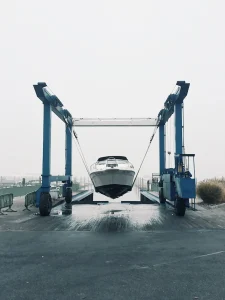
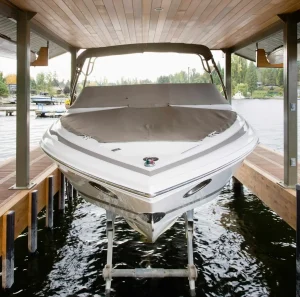
Hydraulic lifts need cylinders inspected and protected. Cracking and seal damage occur if cylinders are exposed to deep freeze cycles without proper preparation. Vertical and cantilever lifts need cables and pulleys inspected during removal because cable wear is a common issue we catch during fall service. PWC and pontoon lifts need bunk inspection, cable check, and proper cribbing.
Every type of lift benefits from documentation of any wear or damage during fall removal so service can be scheduled in winter rather than discovered at install time when our schedule is at capacity.
Bundle Fall Removal and Spring Installation
Many JD Hellenbrand customers book both fall removal and the following spring’s installation at the same time. This delivers three concrete benefits:
Priority scheduling for spring. Our spring schedule fills up months before ice-out. Pre-booked customers get the earliest install windows.
Continuity of crew knowledge. The same team that pulled and stored your equipment knows exactly how it goes back in. No re-learning your property.
Single point of contact for the season. One contract, one schedule, one invoice. Less coordination on your end.
Schedule Fall Removal: Book Before August
Fall removal slots fill up in September and October. The best windows go to customers who book in late summer. Contact us in July or August to secure your fall removal date.
Phone: 608-513-0690
Address: N1792 Ryan Road, Lodi, WI 53555
Website: jdhellenbrand.com
Frequently Asked Questions: Why Winter Dock Storage Matters
Can’t I just leave my dock in the water over winter?
On most Wisconsin lakes, no. Ice expansion will damage or destroy a dock left in the water. Steel sections bend, aluminum frames warp, and pipe legs get pushed out of position by ice movement. Some floating dock systems are designed for in-water winter use, but most pipe and standard aluminum docks need to come out. The Wisconsin DNR also has rules on some water bodies about structures left in over winter. Pulling the dock is the safe, standard practice.
What actually happens to my dock if it’s stored on the ground?
Aluminum and galvanized steel sections in direct contact with soil for five months absorb moisture and corrode at the contact points. Wet, decomposing leaves and grass accelerate the corrosion. Mice and other rodents make winter homes in stacked sections, which damages wiring on connected lifts and creates hardware loss. Properly stored sections sit off the ground on cribbing, which avoids all of this.
Why hire JD Hellenbrand instead of pulling my own dock?
Three reasons. First, dock removal is hard, cold, often dangerous work on slippery November shorelines. Second, proper removal requires specific equipment most homeowners don’t have, especially for boat lifts. Third, you don’t get the inspection. Our crew catches developing problems during removal so they can be addressed before spring rather than discovered as expensive emergencies in April.
How does professional inspection during fall removal save me money?
A cable that’s worn but still functional in October is a routine replacement during winter. The same cable failing in April under boat load is the cable cost plus emergency labor plus a delayed installation plus potentially boat damage. Multiply this across the components on your dock and lift, and the value of fall inspection becomes clear. Most spring repair emergencies were preventable problems visible in October.
When should docks come out on Wisconsin lakes?
Typically late September through October, before the first hard freeze and before ice begins forming on sheltered bays. Smaller, shallower lakes (Lake Waubesa, Lake Kegonsa, Lake Wisconsin) freeze earlier than Lake Monona or Lake Mendota and may need earlier removal. We give you guidance on the right window for your specific lake when scheduling.
Do I need to be home for fall removal?
No. We document the property with photos before and after removal and email you a property report. Many of our customers are seasonal property owners who are back home well before fall removal season. The service is designed for them.
How does fall storage affect my insurance situation?
Some property insurance policies have language about reasonable maintenance and seasonal preparation for waterfront equipment. Documented professional fall removal with photos creates a clear record that you took proper care of the equipment. We can’t speak to your specific policy, but the documentation we provide tends to be useful in any claim or maintenance question.
Will JD Hellenbrand winterize my hydraulic boat lift?
Yes. Hydraulic lift winterization is part of standard fall removal service. We inspect cylinders for seal wear and cracking, check the drive unit, and ensure the lift is positioned correctly for winter freeze cycles. Hydraulic lifts are more vulnerable to winter damage than dock sections, so this matters.
How much does fall removal and winter storage cost?
Cost depends on dock length, lift count, and shoreline accessibility. Most fall removal costs are similar to spring installation costs since the work is essentially the reverse process. We provide free estimates after a property visit. Contact us at 608-513-0690 for a quote.